It is a deeply frustrating experience. You buy expensive, premium laundry detergent, you wash a full load of clothes, and you hang them up to dry. But when you put on your favorite shirt the next day, it does not smell like fresh flowers. It smells sour, damp, and distinctly like an old, wet towel.
Many homeowners in Bahria Town, DHA, and across the twin cities blame the weather, the detergent, or the drying time for this awful smell. But the truth is much simpler and much more unpleasant: your washing machine is dirty.
A washing machine's job is to extract dirt, sweat, and body oils from your clothes. Over time, a large percentage of that biological grime, mixed with leftover soap scum and hard water calcium, builds up in the hidden, dark crevices of the machine. Because the machine is constantly damp, it becomes a perfect breeding ground for black mold and mildew. You are essentially washing your clothes in a swamp of bacteria.
In this essential educational guide, we will teach you how to properly deep clean and sanitize your washing machine, destroying the hidden mold and ensuring your laundry comes out smelling perfectly fresh every single time.
The Problem with Front-Loading Machines
While top loading washing machines can get dirty, front loading machines are notorious for developing terrible odors.
Front loaders are highly water efficient, which is great for your utility bill, but it means they often do not use enough water to fully flush away the soap suds and dirt at the end of a cycle. More importantly, front loaders have a thick, heavy rubber gasket (the seal around the door) designed to prevent water from leaking onto your floor.
This rubber gasket is the primary culprit. Water pools in the deep folds of the rubber after every wash. Because the door is usually shut tight immediately after use, the inside of the machine remains dark and humid—the exact biological conditions required for black mold to explode in growth.
The 4-Step Washing Machine Deep Clean
To fix the smell, you do not need an expensive mechanic. You just need some basic household chemistry and twenty minutes of active work. You should perform this deep cleaning protocol once a month.
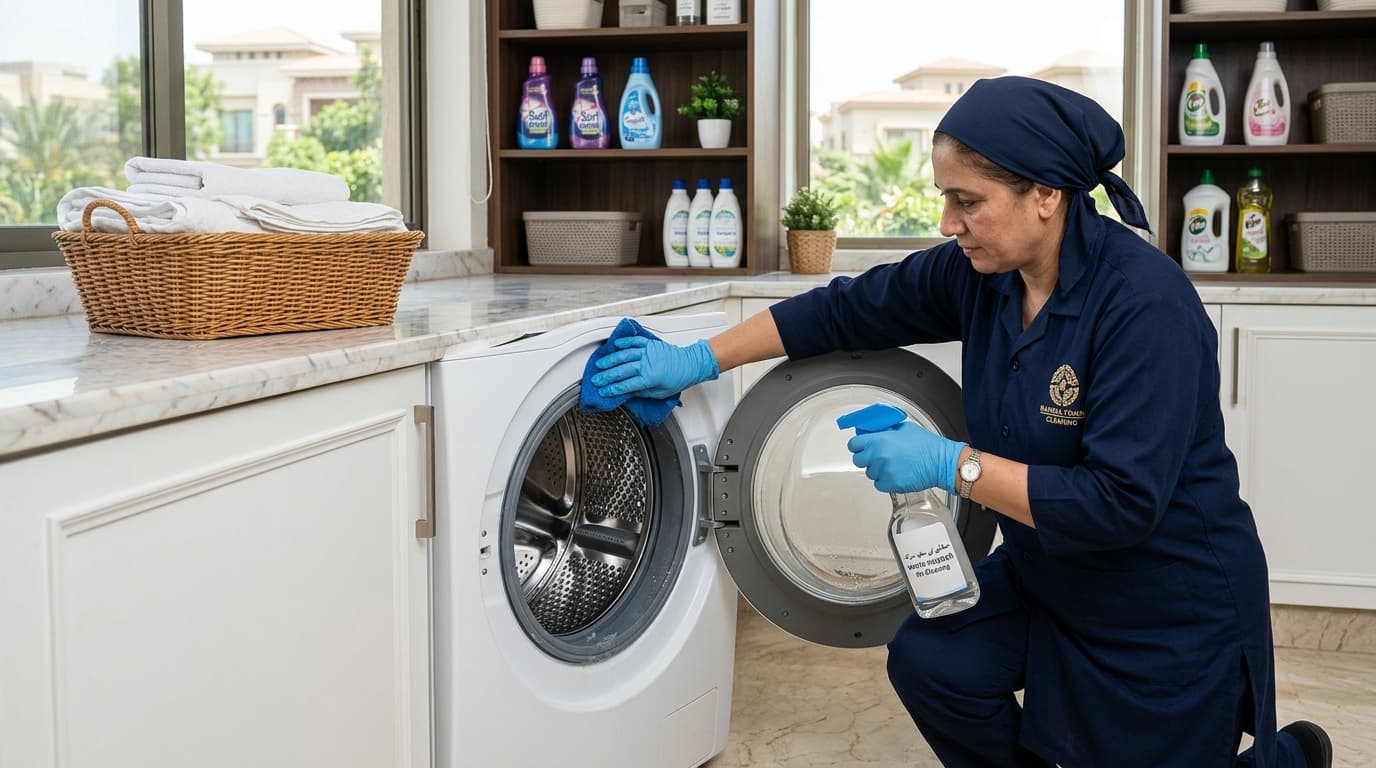
Step 1 The Rubber Gasket Scrub (Front Loaders Only) Open the door of your front loading machine. Take your fingers and gently pull back the thick rubber seal around the opening. You will likely be horrified to find a slimy, black ring of mold, trapped hair, and stagnant water hiding deep inside the fold.
- Take a clean microfiber cloth and spray it heavily with white vinegar or a mild bleach solution.
- Wipe vigorously deep inside the folds of the rubber gasket, working your way around the entire circle.
- If the mold is thick and stubborn, use an old toothbrush dipped in vinegar to scrub the crevices safely without puncturing the rubber.
Step 2 The Filter Purge Every automatic washing machine has a drain filter, usually hidden behind a small plastic flap at the very bottom front of the machine. Its job is to catch coins, keys, lint, and hair before they destroy the water pump.
- Place a shallow towel or tray on the floor beneath the flap, as about a cup of stagnant, awful smelling water will spill out.
- Unscrew the circular filter.
- Pull it out and wash it thoroughly in your bathroom sink under hot running water, picking out all the trapped hair and sludge. Screw it back in tightly.
Step 3 The Acidic Hot Wash (The Internal Cleanse) Now you must clean the internal metal drum and the hidden plastic outer tub where you cannot reach.
- Empty the washing machine completely (no clothes).
- Pour two full cups of pure white vinegar directly into the detergent dispenser drawer. (Vinegar is a mild acid that acts as a powerful, natural sanitizer and easily dissolves the hard water calcium scaling common in Islamabad's water supply).
- Set your washing machine to the absolute longest, hottest cycle available (usually a 90°C "Tub Clean" or "Heavy Duty" cotton setting).
- Let the machine run completely. The boiling hot acidic water will melt the built up soap scum, kill the hidden mildew spores, and flush the internal pipes clean.
Step 4 The Baking Soda Neutralizer (Optional but Recommended) If your machine smelled incredibly bad, you should do a secondary neutralizing wash immediately after the vinegar wash finishes.
- Pour half a cup of dry baking soda directly into the empty metal drum.
- Run the machine again on a fast, hot cycle. Baking soda is highly alkaline. It physically scrubs the remaining loosened grime and chemically neutralizes any lingering sour odors, leaving the machine smelling like absolutely nothing at all.
Daily Habits to Prevent Odors
Once you have deep cleaned the machine and restored it to a hygienic state, you must change your daily laundry habits to prevent the swamp from returning.
- The Golden Rule: Never Close the Door. This is the single most important habit. After taking your wet clean clothes out of the machine, leave the machine door wide open. Leave the detergent drawer slightly pulled out as well. This allows fresh air to circulate through the drum, drying out the moisture rapidly and making it impossible for mold to grow.
- Stop Using Too Much Soap. Most homeowners use double the amount of detergent required. Modern washing machines use very little water. If you put too much thick liquid detergent in, the machine cannot rinse it all out. The leftover soap coats the inside of the machine like a sticky wax, trapping dirt and causing the awful smell. Read the detergent bottle and cut your normal usage in half.
- Remove Clothes Immediately. Do not let a load of wet, washed clothes sit in the closed machine for five hours while you go to work. They will instantly start to smell sour. If you cannot hang them up immediately, delay starting the machine until you are ready.
Conclusion
Your washing machine is a critical tool for maintaining your family's hygiene, but a tool cannot clean effectively if it is fundamentally dirty itself.
That sour, damp smell on your freshly washed clothes is a direct warning sign of biological buildup. By taking twenty minutes once a month to wipe the gasket, clear the filter, and run a boiling hot vinegar cycle, you can destroy the hidden mold. Combine this with the simple daily habit of leaving the door open, and you will guarantee that your laundry always emerges smelling exactly as it should: perfectly fresh and clean.
Frequently Asked Questions
Question Can I use bleach instead of vinegar to clean the drum? Answer Yes, you can run the hot cycle with a cup of liquid chlorine bleach instead of vinegar. Bleach is highly effective at killing black mold. However, never mix bleach and vinegar together, as the chemical reaction creates highly toxic chlorine gas. Use one or the other.
Question Why is the detergent drawer always full of black sludge? Answer That is a mix of leftover fabric softener and mold. Remove the entire plastic drawer (there is usually a release button hidden in the center). Take it to the sink, scrub it thoroughly with a brush and hot soapy water, and ensure the cavity inside the machine where the drawer sits is also wiped clean.
Question Does hard water in DHA damage washing machines? Answer Yes, the heavy calcium and magnesium in hard water scales up the internal heating element of the washing machine, eventually causing it to burn out. Running a monthly hot wash with white vinegar (as outlined in Step 3) dissolves this scale buildup and significantly extends the life of your expensive appliance.
Question My domestic maid does the laundry. How do I ensure she maintains the machine? Answer The most critical step is training your housemaid to use less detergent and explicitly instructing her to leave the washing machine door open when she is finished. Print out the instructions and physically demonstrate the monthly vinegar cleaning cycle so she understands its importance.
Local Got Talent Editorial
Home Management & Care Specialists providing elite standard insights for Islamabad & Rawalpindi residents.