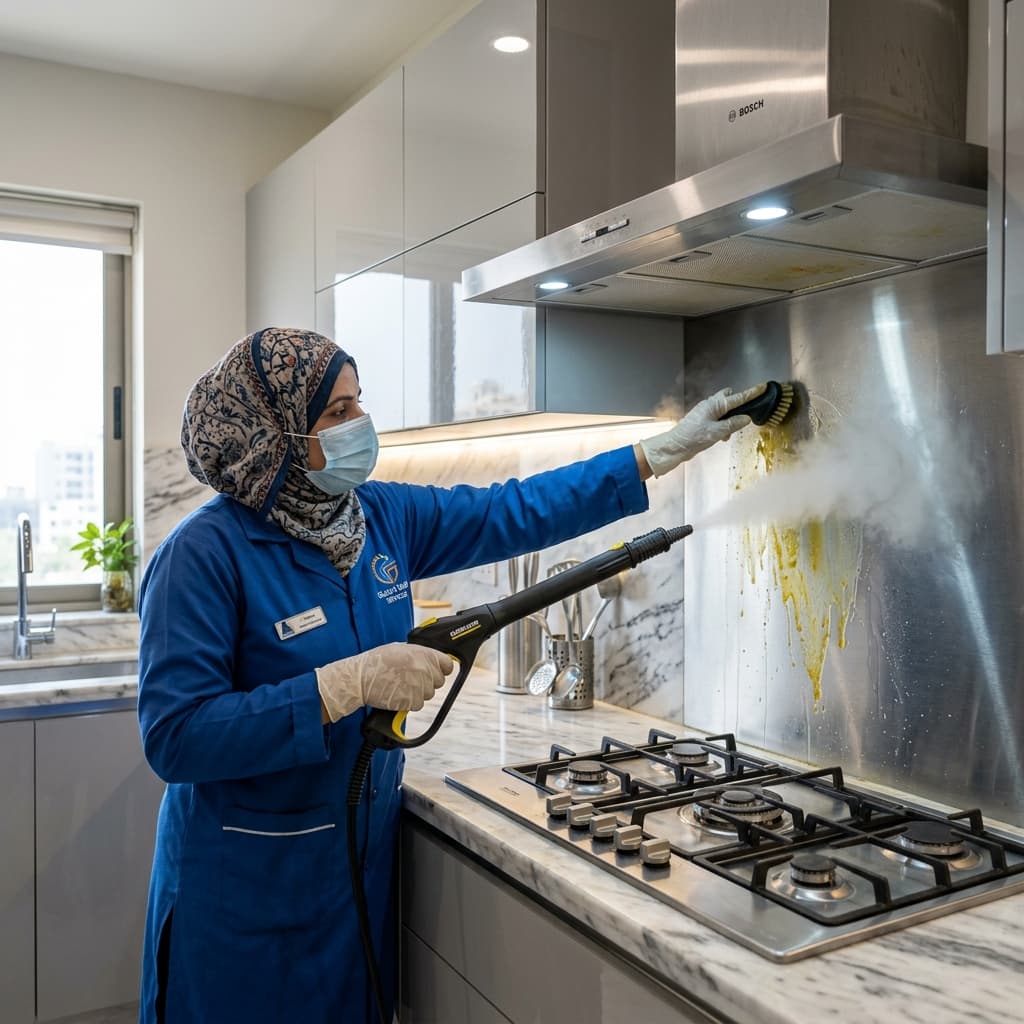
The kitchen is the absolute beating heart of every home in Pakistan. It is where families gather, recipes are passed down through generations, and the rich, complex flavors of our culture are brought to life. However, the very techniques that make our traditional cuisine so incredible—the intense frying, the slow simmering of heavily spiced curries, and the dramatic tempering of oil for the perfect tadka—create a massive cleaning nightmare.
Desi cooking is an inherently oily and heavily aromatic process. When you heat oil to high temperatures, it vaporizes. This microscopic mist of cooking oil, heavily laden with turmeric, chili powder, and garlic, floats through the air and coats absolutely every surface in the kitchen.
Over a remarkably short period, this vapor solidifies into a sticky, stubborn yellow residue. It coats the expensive acrylic cabinets, clogs the exhaust hood, dulls the shine of the marble countertops, and forms a thick crust on the backsplash tiles.
For homeowners in Islamabad and Rawalpindi, maintaining a pristine, modern kitchen while cooking traditional food daily feels like an unwinnable war. In this comprehensive guide, we will explore why generic cleaning methods fail against this unique grease, the danger of ignoring the buildup, and how specialized housekeeping services in Islamabad employ expert strategies to completely restore the heart of your home.
The Unique Chemistry of Desi Grease
To understand how to defeat the grease, you must understand what makes it so incredibly stubborn. The grease generated by traditional Pakistani cooking is fundamentally different from a simple spill.
When cooking oil vaporizes and then cools on a surface like a cabinet door, it undergoes a process called polymerization. The oil molecules bond together to form a tough, plastic like layer. When you mix this polymerized oil with the intense yellow pigmentation of turmeric and the fine dust that blows in from the Islamabad environment, you get a substance that is almost entirely impervious to standard soapy water.
Why Standard Cleaning Products Fail
Most homeowners attempt to tackle this sticky, yellow residue using generic dish soap and a wet sponge. This approach is completely ineffective. Dish soap is designed to break down fresh, liquid fats on plates; it is not strong enough to dissolve polymerized grease.
When you scrub polymerized grease with a standard sponge, you typically end up smearing the sticky residue over a wider area. Out of frustration, many people resort to using abrasive powders or metal scouring pads. This is a catastrophic mistake. Using harsh abrasives will permanently scratch the glossy finish of modern cabinetry and leave permanent swirl marks on stainless steel appliances.
The Hidden Dangers of Kitchen Grease Buildup
Allowing this heavy grease to accumulate is not just an aesthetic issue; it poses serious hygiene and safety risks to your household.
- The Fire Hazard: The most severe risk lies within the exhaust hood and the ducting above the stove. When thick layers of oil accumulate inside the exhaust system, they create a highly flammable environment. A sudden flare up from the stove can easily ignite this grease, leading to a devastating and rapid kitchen fire.
- Pest Infestations: Cockroaches and ants are incredibly attracted to the organic matter trapped within cooking grease. A kitchen with sticky, greasy corners behind the stove or under the cabinets provides an unlimited food source for these pests, making them almost impossible to eradicate.
- Bacterial Growth: The sticky surface of polymerized oil acts like a magnet for airborne dust and bacteria. Kitchens that feel "sticky" to the touch are harboring massive amounts of unseen pathogens right next to where fresh food is prepared.
How Professional Housekeeping Conquers the Grease
To completely eliminate this stubborn buildup and restore the kitchen to its original, factory fresh shine, specialized expertise is required. Professional housekeeping services in Islamabad utilize advanced chemistry, heat, and highly structured methodologies to cut through the toughest desi cooking grease without damaging expensive surfaces.
Here are the expert strategies employed by dedicated domestic staff during a comprehensive kitchen deep clean:
1. The Power of Alkaline Degreasers
Because polymerized cooking grease is essentially an acidic organic compound, it requires a highly alkaline solution to break it down chemically. Professional cleaners do not rely on basic dish soap. They utilize commercial grade, heavy duty alkaline degreasers.
The secret to success is "dwell time". A professional housekeeper will apply the degreaser to the sticky cabinets and heavily coated backsplash tiles and allow it to sit for ten to fifteen minutes. The alkaline chemistry actively dissolves the plastic like bonds of the polymerized oil, turning the stubborn yellow crust into a soft liquid that can be easily wiped away with a microfiber cloth.
2. Utilizing High Pressure Steam
One of the most powerful tools in a professional cleaner's arsenal is the commercial steam cleaner. Steam cleaning uses high pressure water vapor heated to over two hundred degrees Fahrenheit.
The intense heat instantly melts hardened grease, while the pressure blasts it out of the tiny, microscopic pores of the grout lines and the tight crevices around the stove burners. Steam is entirely chemical free, making it perfectly safe for use around food preparation areas, and the extreme temperature instantly kills ninety nine percent of bacteria and hidden mold spores.
3. Exhaust Hood and Filter Restoration
The exhaust hood is the frontline defense against airborne grease, and it requires meticulous maintenance. A standard maid will often just wipe the visible exterior of the hood, completely ignoring the saturated filters inside.
Expert domestic staff will safely remove the heavy metal baffle filters and submerge them in a highly concentrated bath of boiling water and strong alkaline degreaser. This extreme treatment dissolves the thick blocks of congealed fat trapped deep within the filter mesh, restoring the proper airflow and completely eliminating the fire hazard.
4. Safe Detailing for Premium Finishes
Modern kitchens in DHA and Bahria Town often feature highly delicate finishes, such as high gloss acrylic cabinets and natural marble countertops. Professional housekeepers are explicitly trained in material safety.
They know that applying acidic cleaners (like vinegar or lemon) to a marble countertop will permanently etch and destroy the stone. They understand that abrasive sponges will ruin glossy cabinets. By using strictly pH neutral cleaners for stone and specialized non abrasive polishing cloths for cabinetry, they guarantee that the kitchen is aggressively degreased while the expensive structural finishes remain completely protected.
Reclaiming the Heart of Your Home
You should not have to choose between cooking the beautiful, traditional food you love and maintaining a pristine, modern home. The sticky, yellow residue of daily cooking does not have to be a permanent fixture in your kitchen.
By securing dedicated, professional domestic support, you empower your household with the specialized knowledge and heavy duty cleaning techniques required to defeat this unique challenge.
A professional housekeeper will ensure that your countertops always gleam, your exhaust hood remains safe and highly functional, and your cabinetry remains completely free of that notorious sticky film. Reclaim the heart of your home and enjoy the ultimate luxury of a flawlessly clean kitchen by investing in expert residential management today.
Our Premium Home Services
To ensure your home remains in pristine condition, we highly recommend utilizing our dedicated professional services. Explore how we can transform your living space:
Local Got Talent Editorial
Home Management & Care Specialists providing elite standard insights for Islamabad & Rawalpindi residents.