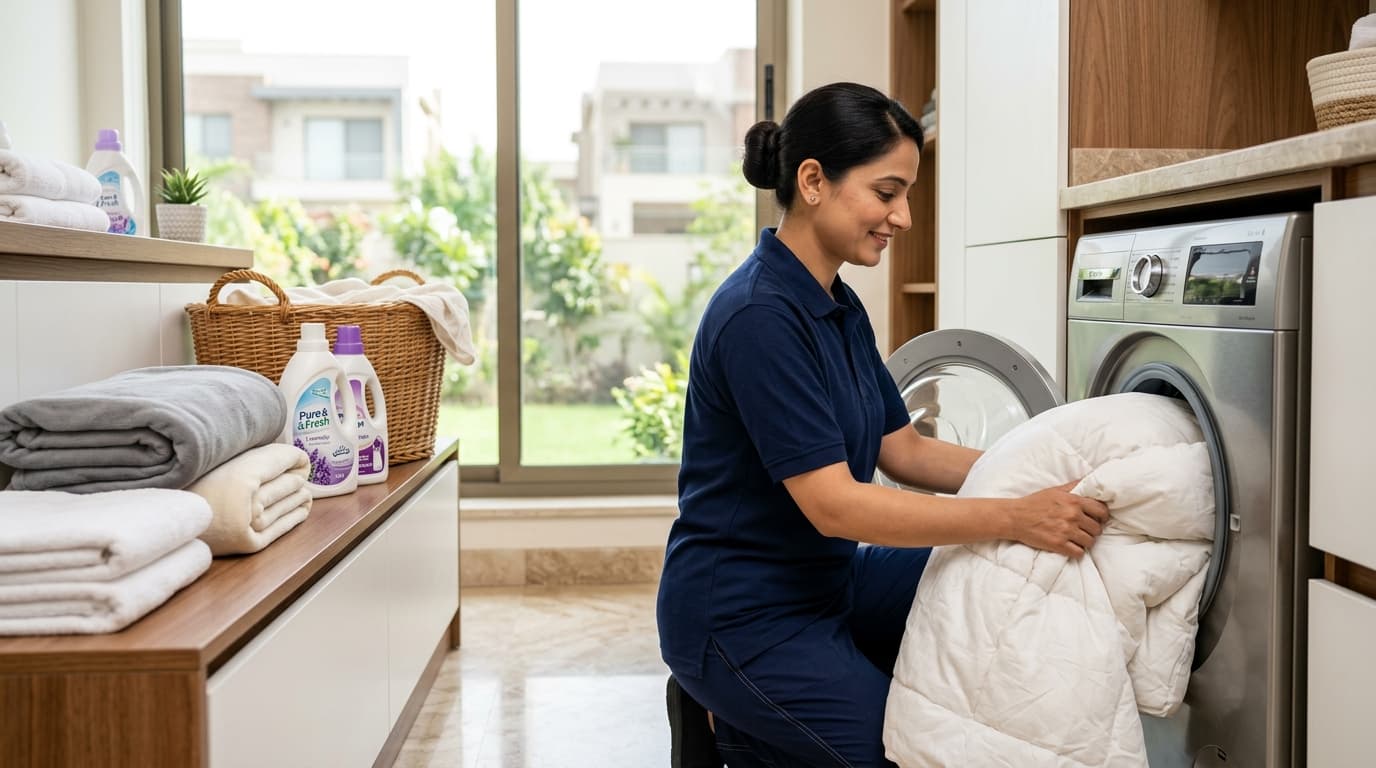
As the intense heat of the Pakistani summer arrives, homeowners in PWD, Media Town, and across the capital face the daunting annual task of storing away the winter gear. The biggest headache in this process is dealing with the massive, heavy winter blankets, comforters, and traditional cotton filled razais.
Over the long winter months, these heavy blankets absorb sweat, body oils, dust mites, and whatever snacks were eaten in bed. Putting a dirty blanket into a plastic storage bag for six months is a terrible idea; the trapped body oils will turn yellow, and it will smell musty and stale when you take it out next November.
The standard solution is to send everything to the dry cleaner. However, dry cleaning four heavy blankets can easily cost thousands of rupees.
The good news is that you can safely and effectively wash most heavy winter blankets and modern comforters at home. In this educational guide, we will provide you with the exact techniques to deep clean your heavy bedding without destroying its shape, clumping the filling, or breaking your washing machine.
Step 1 The Crucial Label Check
Before water touches the fabric, you must know what is inside the blanket.
- Traditional Cotton Razai: A traditional, heavy Pakistani razai stuffed with raw, loose cotton cannot be washed in a washing machine or soaked in a bathtub. If raw cotton gets completely soaked, it clumps into solid, heavy rock like balls that will never dry properly and will develop black mold inside. Traditional razais must be spot cleaned on the surface and left in the hot sun for two days to kill bacteria (sun baking). Only the outer, removable cover should be washed.
- Modern Comforters (Polyester/Microfiber Fill): These are the thick, fluffy blankets commonly bought from modern stores. They are generally perfectly safe to wash at home because the synthetic filling does not clump permanently when wet.
- Weighted Blankets or Heavy Wool: Check the label carefully. Wool requires cold water and specific wool safe detergents to prevent massive shrinkage. Weighted blankets are often too heavy for a home washing machine and must be spot cleaned or taken to a commercial laundromat.
Step 2 The Washing Machine Weight Limit
A dry modern comforter might feel light, but when it absorbs ten liters of water, it becomes a massive, heavy weight.
Do not force a king sized heavy blanket into a small, 7kg top loading washing machine. If the blanket is jammed in so tightly that it cannot move, it will not get clean. Worse, the extreme unbalanced weight of the wet blanket during the spin cycle can permanently destroy the suspension springs of your washing machine motor.
If your machine is too small (the blanket should fill no more than 75% of the drum loosely), you must use the Bathtub Method (outlined in Step 4).
Step 3 The Machine Wash Protocol
If you have a large capacity washing machine (9kg or above) and a modern synthetic comforter, follow this strict protocol:
- Spot Treat First: Lay the blanket out and check for specific stains (like a tea spill). Treat those spots first with a drop of liquid dish soap and gently rub it in. Let it sit for ten minutes.
- Load Smartly: Do not just ball the blanket up and throw it in. Fold it accordion style and place it evenly around the central agitator (if you have a top loader) or loosely into the front loader drum. This keeps the weight balanced.
- The Tennis Ball Trick: Throw two clean tennis balls (tied inside clean white socks) into the washing machine with the blanket. As the machine washes and spins, the tennis balls will beat against the blanket, physically preventing the synthetic filling from clumping together in one corner.
- Use Liquid Detergent: Never use powder detergent on heavy blankets. Powder often fails to dissolve completely in thick folds of fabric, leaving white, crusty streaks when it dries. Use a small amount of liquid detergent.
- The Gentle Cycle: Wash on a cold or warm "Delicate" or "Bulky Bedding" cycle. Avoid high heat, as hot water can melt or warp the internal polyester batting.
- Extra Rinse: Heavy blankets absorb a lot of soap. Always run an "Extra Rinse" cycle to ensure absolutely all detergent is washed out. Leftover soap will make the blanket feel stiff and attract dust quickly.
Step 4 The Bathtub Stomping Method (For Small Machines)
If your machine is too small, you can wash a massive blanket perfectly in a standard bathtub using a traditional, highly effective method.
- Ensure the bathtub is completely clean. Fill it halfway with lukewarm water and dissolve a cup of liquid detergent into the water.
- Submerge the heavy blanket completely in the soapy water.
- Take off your socks, roll up your trousers, step into the bathtub, and gently march up and down on the blanket with your bare feet for five to ten minutes. Your body weight pushes the soapy water through the thick fibers much more effectively than your arms ever could.
- Drain the dirty, grey water. Press down on the blanket to push out the suds.
- Refill the tub with clean, cold water. March on the blanket again to rinse it. Drain and repeat this rinsing process until the water runs completely clear and bubble free.
- Drain the tub. Press down heavily on the blanket to extract as much water as possible. Do not attempt to twist or wring it.
Step 5 The Crucial Drying Phase
Drying a heavy blanket is harder than washing it. If it dries too slowly, it will smell like damp mildew.
- The Sun is Your Friend: The best way to dry a heavy synthetic comforter in Pakistan is to hang it outside on a strong line in direct sunlight on a hot, breezy day. The heat evaporates the deep moisture quickly, and the UV light naturally kills any remaining bacteria and brightens the fabric.
- The Fluffing Process: While the blanket is hanging on the line and drying, go outside every hour and vigorously shake it and punch it with your hands. This physical agitation breaks up any internal clumps of wet filling and redistributes the fluff evenly across the blanket.
- Ensure Absolute Dryness: Never pack a blanket into a storage bag if it feels even slightly cool or damp in the center. It must be bone dry. If you are unsure, leave it in the sun for an extra day.
Conclusion
You do not need to spend thousands of rupees at the dry cleaner every spring. With a large enough washing machine or a clean bathtub, a bottle of liquid detergent, and the intense heat of the Pakistani sun, you can safely deep clean your heavy winter bedding at home.
By following these professional steps—spot treating, using the tennis ball trick to prevent clumping, ensuring a thorough extra rinse, and aggressive sun drying—your blankets will be impeccably clean, fresh smelling, and perfectly prepared for long term summer storage.
Frequently Asked Questions
Question Should I use fabric softener when washing a heavy winter blanket? Answer No, avoid liquid fabric softeners. They coat the fibers of the blanket in a thin layer of chemical wax to make it feel soft. Over time, this wax buildup makes the blanket heavy, reduces its fluffiness, and actually traps bad odors inside the filling.
Question How do I store the blankets safely for the next six months? Answer Once they are completely, one hundred percent dry, fold them neatly and place them in breathable cotton storage bags or vacuum sealed plastic space bags. Throw a few cedar wood balls or dried lavender sachets into the bag before sealing it to repel insects and keep the fabric smelling fresh until winter returns.
Question My traditional cotton razai smells musty. What can I do if I cannot wash it? Answer Do not wash the raw cotton filling. Remove the outer decorative cover and wash that in the machine. Take the heavy, raw cotton inner quilt and lay it flat on your roof in direct, intense sunlight for two full days, flipping it over halfway. The intense heat and UV rays will kill the mildew bacteria causing the smell.
Question I do not have time for this heavy laundry. Can Local Got Talent help? Answer We specialize in providing verified, professional domestic staff who can manage the heavy, time consuming laundry tasks for your household, ensuring your clothes and bedding are properly cared for while you focus on your busy daily routine.
Local Got Talent Editorial
Home Management & Care Specialists providing elite standard insights for Islamabad & Rawalpindi residents.