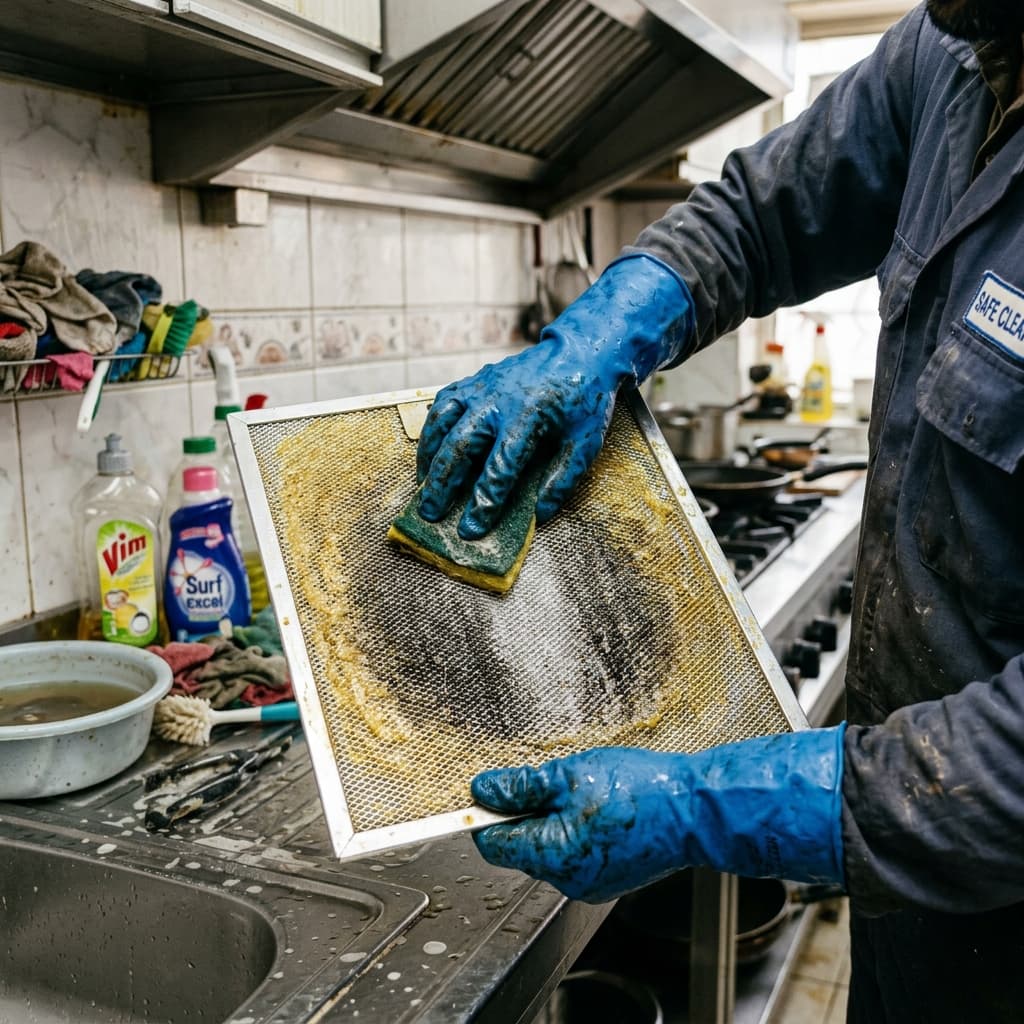
If you live in the beautiful residential sector of PWD in Islamabad, you know that the kitchen is the absolute center of your daily family life. The aroma of traditional Pakistani food, from sizzling chicken karahi to deep fried samosas and parathas, fills our homes with warmth and joy. However, this delicious desi cooking comes with a very heavy maintenance cost that most homeowners do not realize until it is too late. The heavy use of cooking oil, ghee, and strong spices creates a thick, sticky layer of grease that specifically targets your kitchen chimney and exhaust fans.
Unlike western cooking which involves a lot of baking and boiling, our traditional recipes rely heavily on high heat frying and simmering. This releases microscopic oil particles into the air. If you do not have a powerful, properly functioning exhaust system, this grease settles on your beautiful kitchen cabinets, your expensive marble countertops, and your walls.
In this comprehensive guide, we will explore exactly why desi cooking grease is so difficult to manage, provide a step by step guide on how to deeply clean your kitchen chimney and exhaust fans, and explain why relying on professional deep cleaning services is often the smartest choice for maintaining the value of your property in PWD.
The Hidden Danger of Kitchen Grease
Many homeowners in PWD spend millions of rupees installing beautiful imported kitchens. They choose high gloss cabinets, expensive tiles, and state of the art electronic chimneys. But within just six months of regular cooking, they notice a sticky yellow film covering everything near the stove.
This sticky film is not just an aesthetic problem. It is a serious hazard for three main reasons:
First, it is a severe fire risk. Cooking grease is highly flammable. If a pan catches fire on the stove, and the flames reach the heavily greased filter of your chimney, the entire exhaust system can catch fire in seconds. This is one of the leading causes of residential kitchen fires.
Second, it destroys your appliances. The motor inside your exhaust fan or electronic chimney has to work extremely hard to pull air through a filter blocked by solid grease. This constant strain causes the motor to overheat and eventually burn out. Replacing the motor of an imported chimney can cost tens of thousands of rupees.
Third, it compromises indoor air quality. If the exhaust fan is blocked, the smoke and oil particles stay inside the house. You will notice that the smell of fried onions stays in your drawing room curtains for days. This trapped smoke can cause coughing and worsen asthma in children and elderly family members.
Why Your Daily Maid Cannot Clean the Exhaust
It is a common practice in PWD and surrounding sectors to ask the daily cleaning maid to wipe down the stove and the cabinets. While a housemaid is perfect for washing plates and sweeping the floor, cleaning a kitchen exhaust requires specific skills and chemicals that she does not possess.
A regular maid uses dishwashing liquid and a soft sponge. Dishwashing liquid is designed to remove fresh, soft oil from ceramic plates. It is completely useless against the baked on, polymerized grease found inside a chimney hood. When a maid tries to scrub this grease with a regular sponge, she only spreads the sticky mess around, making the surface look cloudy and dull.
Furthermore, cleaning the internal parts of an exhaust fan requires standing on countertops, removing screws, and handling delicate electrical wires. This is dangerous work. Expecting a daily cleaner to perform industrial level degreasing is both unfair and highly ineffective.
The Chemistry of Desi Grease
To understand how to clean the grease, you must understand what it is. When cooking oil is heated to high temperatures during the preparation of dishes like biryani or pakoras, it changes its chemical structure. As it floats in the air and lands on the cold surface of your exhaust fan, it begins to oxidize and harden.
Over a few weeks, this oil mixes with the fine dust present in the Islamabad air. The result is a hard, glue like substance called polymerized grease. You cannot wipe it away with a wet cloth. You cannot dissolve it with plain hot water. You need an alkaline chemical reaction to break the bonds of this grease.
This is why professional cleaning teams use specialized industrial degreasers. These chemicals have a high pH level, which reacts with the solid fats and turns them into a liquid soap that can be easily washed away. If you are attempting to clean this yourself, you must use the right materials.
Step by Step Guide to Cleaning Your Kitchen Exhaust
If you want to attempt this difficult task yourself on a Sunday, you must follow a very strict procedure to ensure you do not damage the electronic parts of your chimney.
Preparation and Safety First Before you begin, turn off the main electrical switch connecting to the chimney or the exhaust fan. Safety is paramount. Wear thick rubber gloves and safety glasses. Degreasing chemicals are strong and can burn your skin and eyes. Cover the stove and the countertops below the exhaust with old newspapers or thick plastic sheets to catch the falling grease.
Removing the Filters Almost all modern chimneys have metal baffle filters or mesh filters. Look for the small plastic or metal latches on the edges. Push the latch and gently pull the filter down. If the filter is stuck because of too much grease, do not pull it forcefully. Use a hair dryer on a hot setting to melt the edges slightly until it releases.
Soaking the Filters Take the filters to your kitchen sink or a large plastic tub. You will need boiling water, a cup of baking soda, and a strong dishwashing liquid. Fill the tub with boiling water. Slowly add the baking soda; it will fizz. Add a generous amount of the soap. Submerge the metal filters completely in this hot mixture. Let them soak for at least two hours. The heat and the baking soda will slowly soften the hardened desi grease.
Scrubbing and Rinsing After two hours, take a stiff nylon brush. Do not use steel wool, as it will scratch the metal and cause it to rust in the future. Scrub the filters aggressively. You will see the water turn a dark brown color as the grease melts away. Once clean, rinse them thoroughly under hot running water. They must be completely dry before you put them back into the chimney.
Cleaning the Inner Hood While the filters are soaking, you must clean the inside of the chimney hood. Do not spray any liquid directly into the hood, as it might reach the motor. Instead, spray a heavy duty kitchen degreaser onto a rough sponge. Wipe the inside walls of the hood. You will need to apply a lot of pressure. Wipe it clean with a damp microfiber cloth, and then dry it immediately with a paper towel.
The Exhaust Fan Challenge
If your kitchen in PWD does not have a large chimney, you probably rely on a wall mounted exhaust fan. Cleaning this is even more challenging because the plastic blades become heavy with grease, causing the fan to shake and make a loud noise.
First, remove the front plastic grill. This usually requires a screwdriver. Soak the grill in the same hot water and baking soda mixture.
Next, you must clean the fan blades. Do not remove the blades unless you are very confident in your mechanical skills. Spray a degreaser onto a cloth and wipe each blade individually. You have to pinch the blade between your fingers and drag the cloth from the center to the edge. It is a slow, messy process, but it is the only way to balance the fan and stop the loud vibrating noise.
Preventing Grease Buildup
Once your exhaust system is completely clean, you need to establish a routine to prevent the grease from becoming rock hard again. The secret is frequency.
- The Daily Wipe After every heavy cooking session, especially after frying, take a microfiber cloth sprayed with a mild cleaner and quickly wipe the outer surface of the chimney and the nearby tiles. Doing this while the kitchen is still slightly warm prevents the oil from hardening.
- The Weekly Soak You do not need to do a full deep clean every week, but you should remove the metal filters every Sunday and run them through a dishwasher or soak them in hot soapy water for twenty minutes. This weekly habit stops the heavy buildup.
- Proper Ventilation Always turn the exhaust fan on five minutes before you start cooking, and leave it running for ten minutes after you finish. This creates a strong air current that pulls the remaining smoke out of the kitchen before it settles on the cabinets.
Why PWD Residents Prefer Professional Cleaning
Reading the steps above, you can see that degreasing a kitchen is an exhausting, dirty, and time consuming job. It requires standing on stools, breathing in strong chemicals, and scrubbing for hours. For the busy professionals, doctors, and business owners living in PWD, giving up a precious Sunday for this task is not practical.
This is exactly why smart homeowners outsource this difficult task to experts. Hiring a professional deep cleaning team is an investment in the longevity of your home.
When a professional team arrives at your house in PWD, they bring specialized equipment that is not available in local supermarkets. They use commercial grade, non toxic degreasers that melt away years of baked on grease in minutes without damaging the shiny finish of your expensive appliances.
They also have the technical knowledge to safely dismantle the exhaust fans, clean the hidden motor components, and reassemble everything perfectly. They clean the hard to reach areas, like the wall behind the stove and the narrow gaps between the cabinets and the ceiling.
The Financial Value of Maintenance
Many people hesitate to book a professional cleaning service because they want to save money. But let us consider the real cost of neglect.
A good quality kitchen chimney costs upwards of fifty thousand rupees. The wooden cabinets and imported tiles cost hundreds of thousands. If you allow acidic grease to sit on these surfaces for a year, the paint will peel, the wood will rot, and the chimney motor will burn out. You will end up spending massive amounts of money on repairs and replacements.
A scheduled deep cleaning session every three to four months acts as an insurance policy for your kitchen. It keeps your appliances running at peak efficiency, which actually saves electricity. It maintains the visual appeal of your home, preserving its property value.
Local Got Talent The Trusted Choice for PWD
At Local Got Talent, we understand the specific challenges faced by households in PWD. We know that Pakistani cooking requires heavy duty cleaning solutions. We have trained our teams specifically to tackle the stubborn grease produced by traditional recipes.
When you book our services, you are not just getting a cleaner with a sponge. You are getting a highly trained, verified, and professional team. We respect your home, we protect your appliances, and we deliver results that are impossible to achieve with regular household products.
We also offer integrated housekeeping solutions. You can combine a kitchen deep clean with a full home sanitization, ensuring every room in your house is fresh, clean, and safe for your family.
Conclusion
The kitchen is the heart of your home in PWD. It is where you prepare nourishing meals for your loved ones and where family memories are made. Do not let the unavoidable byproduct of our delicious desi cooking ruin this beautiful space.
Grease buildup is a slow, silent enemy. It destroys appliances, creates fire hazards, and degrades the air you breathe. While daily wiping is helpful, it is not enough to stop the long term accumulation of polymerized fat inside your exhaust systems.
Take control of your home maintenance today. Look closely at your kitchen exhaust fan or chimney hood. If you see a thick yellow layer, or if the fan sounds louder than usual, it is time for a serious intervention. Do not burden your daily maid with an impossible task, and do not spend your valuable weekend scrubbing metal filters.
Trust the experts. Book a professional deep cleaning session and experience the profound difference of a truly pristine, factory fresh kitchen. Protect your investment, protect your family's health, and continue enjoying the incredible flavors of Pakistani cuisine without any of the stress.
Frequently Asked Questions
Question How often should I get my kitchen chimney professionally deep cleaned? Answer For a typical Pakistani household in PWD that cooks lunch and dinner daily, a professional deep clean is recommended every three to four months. If you do a lot of deep frying for a large joint family, you might need it every two months.
Question Can strong degreasing chemicals damage my wooden kitchen cabinets? Answer Yes, if used incorrectly. Commercial degreasers are highly alkaline and can strip the polish off wooden cabinets if left on too long. This is why professional cleaners apply specific protective chemicals to wood and use targeted application methods to ensure only the grease is removed, leaving the cabinet finish perfectly safe.
Question My exhaust fan is making a very loud vibrating noise. Will cleaning fix it? Answer In most cases, yes. The loud noise is usually caused by an imbalance in the fan blades due to heavy, uneven grease buildup. Once a professional cleans the blades completely, the balance is restored, and the fan will run quietly again. If the noise continues after cleaning, the motor bearings might be permanently damaged and need replacement.
Question Do the cleaning teams make a mess in the rest of the kitchen? Answer Absolutely not. A professional team takes strict preparatory measures. They cover your stoves, countertops, and floors with protective sheets before starting the process. All the heavy scrubbing is done in controlled tubs, and the area is left completely spotless and dry before the team leaves your house.
Question Is it safe to leave the house while the deep cleaning team is working? Answer Through Local Got Talent, every member of our deep cleaning team is thoroughly vetted, background checked, and verified by local police. We guarantee absolute security. However, we generally recommend that an adult family member is present in the house, even if they are resting in another room, to answer any specific questions the team supervisor might have regarding your appliances.
Local Got Talent Editorial
Home Management & Care Specialists providing elite standard insights for Islamabad & Rawalpindi residents.