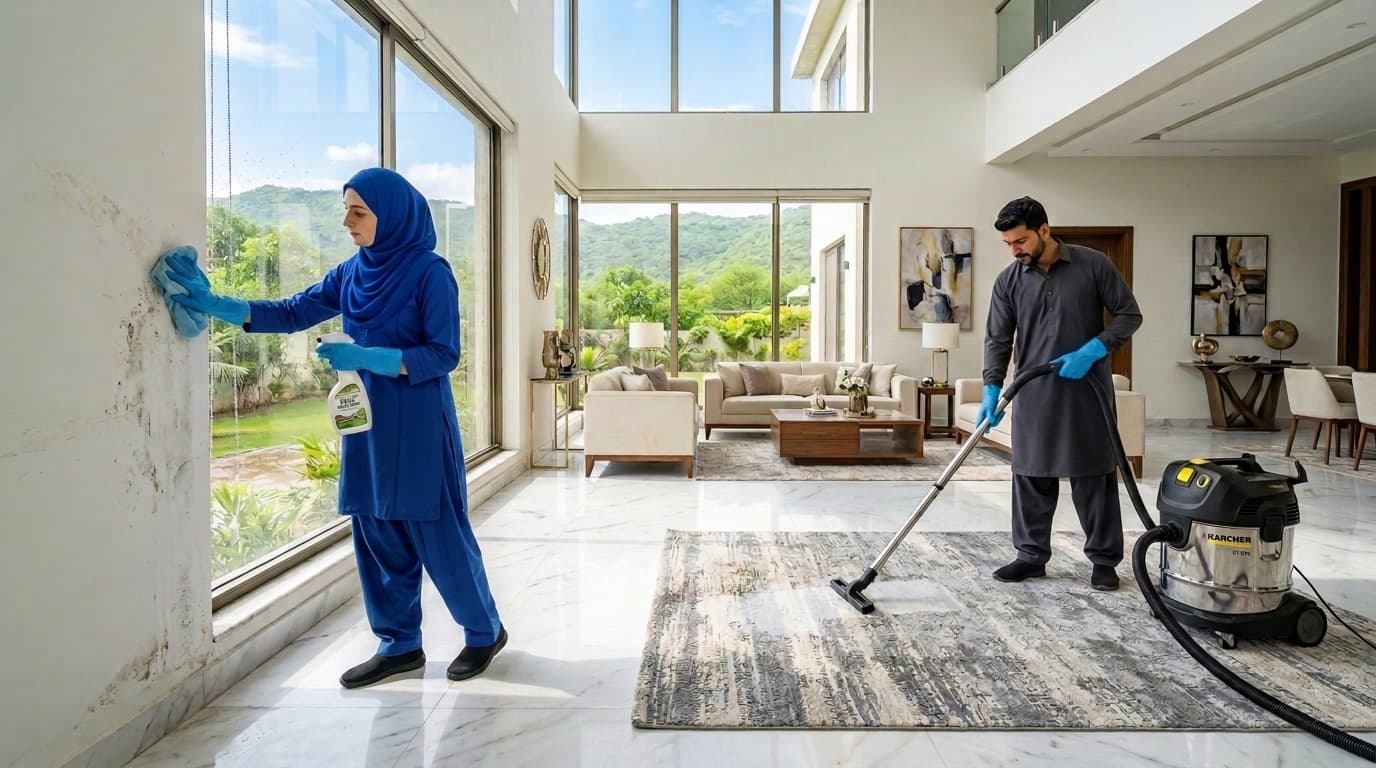
The monsoon season in Islamabad and Rawalpindi is a beautiful time. The Margalla hills turn bright green, the weather becomes cool, and the heavy rain brings relief from the extreme summer heat. But when the rain finally stops in late August and early September, it leaves behind a hidden enemy in our homes. That enemy is dampness and mold.
If you live in DHA, Bahria Town, or any sector in Islamabad, you probably know this struggle. You open a wooden cupboard and smell a strange, bad odor. You look at the lower part of your bedroom wall and see the paint bubbling and peeling off. You lift a carpet and find a green or black powdery substance growing underneath. This is mold, and it is destroying your beautiful home while also making your family sick.
Normal daily cleaning cannot fix this problem. Wiping a moldy wall with a wet cloth only makes it worse, because mold feeds on water. What you need is a proper, detailed post monsoon deep cleaning. In this guide, we will talk in simple words about how you can remove this dampness from every corner of your house, and why hiring professional cleaners is often the best choice to protect your expensive furniture and walls.
Understanding the Damage of Monsoon Humidity
Water is powerful. Even if your roof does not leak, the air itself becomes very heavy with water during the monsoon. This is called humidity. When humid air enters your house, it touches cool surfaces like walls, wooden doors, and leather sofas. The water from the air sticks to these surfaces. Because the sun is often hidden behind clouds, this water never dries properly.
When things stay wet for a few days in a warm environment, mold and fungus start to grow. Mold is a type of living organism that eats away the material it grows on. It will slowly eat your expensive solid wood furniture. It will destroy the polish on your doors. It will permanently stain your soft carpets and expensive rugs.
Besides damaging your house, mold is very bad for human health. When mold grows, it releases tiny seeds into the air called spores. When you breathe in these spores, they cause coughing, sneezing, skin allergies, and asthma attacks. Children and elderly people are at the biggest risk. This is why removing mold is not just about making the house look nice; it is about keeping your family breathing safely.
The Problem with Ignoring Dampness
Many people in Pakistan ignore the damp smell. They spray some room freshener and close the door. This is a very big mistake.
If you leave dampness in your cupboards, your clothes will start smelling bad, and eventually, the fabric will rot. If you leave mold on your walls, the plaster underneath the paint will become soft and fall down. Fixing a ruined wall costs tens of thousands of rupees. You will have to call a painter, scrape the wall, apply water proofing chemicals, and repaint the entire room.
A thorough deep cleaning session immediately after the monsoon can save you all this money and trouble. It stops the problem before it becomes a disaster.
Step by Step Post Monsoon Cleaning The Walls and Roofs
The first place to check for damage is your walls, especially the walls that face the outside weather.
- Checking for Seepage Look closely at the bottom corners of your rooms. Look around the windows. If you see brown water stains or peeling paint, you have seepage. This means water is entering from outside. Before you clean the inside, you must get the outside wall sealed.
- Cleaning Surface Mold If you see black spots on the wall, do not wash it with plain water. You must use a mixture of water and white vinegar, or water and a little bit of bleach. Vinegar kills the roots of the mold. Wear a mask over your nose, take a rough sponge, dip it in the vinegar mixture, and scrub the black spots away. Dry the wall immediately with a dry towel.
- Ventilation is Key After cleaning, open all the windows in the room. Turn on the ceiling fan at full speed. The room must dry completely. If you have an exhaust fan in the room, keep it running for a few hours. Let the fresh air and sunlight enter the room. Sunlight is a natural killer of mold.
Restoring Wooden Furniture and Cupboards
Wooden items absorb moisture like a sponge. This makes doors expand and get stuck, and cupboards start smelling stale.
- Empty the Cupboards Take out all your clothes, shoes, and bags from your wooden wardrobes. Leave the cupboard doors wide open for at least two whole days. Let the wood breathe.
- Wiping the Wood Take a dry, soft cotton cloth. Wipe the inside and outside of the cupboards, beds, and tables. If you see white powdery fungus on the wood, wipe it off gently. Do not use a wet cloth.
- Using Moisture Absorbers You can buy small boxes of moisture absorbers from big grocery stores in Islamabad. These boxes contain chemical balls that pull water out of the air. Place one box inside every closed cupboard. If you cannot find them, you can put a small bowl of dry baking soda or a few pieces of natural chalk in the corner of the cupboard. They will absorb the bad smell and extra moisture.
- Checking Leather Goods Leather shoes and jackets are the first things to grow white fungus during the monsoon. Wipe them clean with a dry cloth and polish them. Never pack leather items in sealed plastic bags during the rainy season; they need air.
Deep Cleaning Carpets and Sofas
Fabric absorbs a huge amount of water from humid air. Even if you never spilled water on your sofa, it will feel slightly wet to the touch during August.
- Sunlight for Small Rugs If you have small carpets or rugs, take them outside on a bright sunny day. Hang them over a wall or a strong wire. Beat them with a stick to remove the dust, and let them bake in the hot sun for five hours. The heat will kill all bacteria and dry out the dampness.
- Sprinkling Baking Soda For large carpets and heavy sofas that you cannot take outside, sprinkle dry baking soda powder all over them. Rub the powder slightly into the fabric. Leave it there for two or three hours. The baking soda will pull out the bad smell and moisture. After three hours, use a vacuum cleaner to suck all the powder out. Your sofa will smell fresh again.
- Professional Upholstery Cleaning Sometimes, a carpet becomes too damp and starts smelling like wet dog. In this case, baking soda will not work. You need to call a professional cleaning service. They use specialized industrial machines that wash the carpet and extract the water immediately, leaving it clean and dry.
Kitchen and Bathroom Dampness
Kitchens and bathrooms are already wet places. During the monsoon, they become perfect breeding grounds for all kinds of fungus and insects.
- Cleaning the Kitchen Cabinets The cabinets under your kitchen sink are very dark and closed. Open these doors. Empty everything out. Wipe the inside with a vinegar solution. Leave the doors open overnight to dry. Check your spice jars; moisture can ruin your expensive spices, so make sure all lids are tight.
- Bathroom Tiles and Grout Look at the white cement lines between your bathroom tiles. During the monsoon, these lines turn black or pink. This is mold. You need a strong bathroom cleaner and a hard brush. Scrub these lines hard. Wash the floor and use a wiper to push all the water down the drain. Do not let water sit on the bathroom floor.
- Washing Exhaust Fans Take a look at your kitchen and bathroom exhaust fans. The blades are probably covered in thick, sticky, black dirt. This dirt blocks the air. If the air cannot go out, the dampness stays inside. Ask your maid or a handyman to open the fan cover and clean the blades thoroughly.
Why You Need a Professional Cleaning Service
Reading this checklist, you might feel tired already. Deep cleaning a large house in DHA or Bahria Town after the monsoon is not a one person job. It is hard physical work. It requires moving heavy beds, climbing ladders to reach exhaust fans, and scrubbing walls for hours.
Your regular daily maid cannot do this. She only has one or two hours for your house, and she does not have the special tools, ladders, or strong chemicals needed to kill mold completely.
This is where a professional deep cleaning team from Local Got Talent becomes essential.
When you hire a professional team, they come prepared. They bring their own industrial vacuum cleaners. They bring special chemicals that kill mold roots without destroying your wall paint. They have the manpower to lift your heavy carpets and sofas to clean underneath them. They work systematically, room by room, ensuring no corner is missed.
Most importantly, they save your time and your health. You do not have to breathe in the harmful mold dust while scrubbing the walls. You can relax or go to your office, knowing that a verified, trusted team is restoring your home to a clean and safe condition.
Setting New Habits for the Rest of the Year
Once your house is deeply cleaned, you need to maintain it. Teach your family and your domestic staff a few simple habits to keep the dampness away.
First, always use exhaust fans when cooking or taking a shower. Let the steam out of the house. Second, on sunny days, open the windows for at least two hours to let fresh air cross through the house. Third, do not dry wet clothes inside the rooms on chairs or beds. Always hang wet laundry outside or in a very well ventilated washing area. Fourth, fix any leaking pipes the same day you notice them.
Conclusion
The monsoon brings life to the outdoors, but it brings decay to the indoors if you are not careful. The damp smell, the peeling paint, and the white fungus on your shoes are all warning signs. They are telling you that your house is suffering.
Do not ignore these signs. A house is a massive investment, and keeping it maintained is your responsibility. The small cost of a thorough deep cleaning session is nothing compared to the huge cost of repairing ruined walls or buying new bedroom furniture.
Take a walk around your house today. Open your cupboards and smell the air. Check behind your heavy curtains. If you see the signs of dampness and mold, it is time to take action. Gather your cleaning supplies, or better yet, book a professional deep cleaning team. Protect your home, protect your health, and enjoy the beautiful post monsoon weather with complete peace of mind.
Frequently Asked Questions
Question Is bleach or vinegar better for killing mold on walls? Answer Vinegar is much better. Bleach only kills the mold on the surface and removes the color, but it leaves the roots alive inside the wall. Vinegar goes deep into the material and kills the mold from the roots. It also has a strong smell, but it is safe and natural.
Question How much time does a professional deep cleaning take for a standard house? Answer For a standard double story house in Islamabad, a professional team of three to four people will usually take a full day, from morning till evening, to deep clean every room, bathroom, and kitchen properly.
Question Can mold on the walls make my children sick? Answer Yes, absolutely. Mold spores travel in the air. When children breathe them in, it can cause continuous coughing, red watery eyes, skin rashes, and if they have asthma, it can trigger severe attacks. Removing mold is a medical necessity, not just a cleaning task.
Question Will putting naphthalene balls (mothballs) in the cupboard stop the dampness? Answer Naphthalene balls are good for keeping insects away, but they do not absorb moisture. To stop dampness, you need moisture absorbing boxes or dry baking soda.
Question Can Local Got Talent provide a team that brings all their own supplies? Answer Yes, when you book a deep cleaning service with us, our professional teams arrive fully equipped. They bring their own machines, chemicals, dusters, and mops. You do not need to provide anything except access to water and electricity.
Local Got Talent Editorial
Home Management & Care Specialists providing elite standard insights for Islamabad & Rawalpindi residents.