Living in modern, upscale developments like Giga Downtown offers a fantastic lifestyle, but every resident of Pakistan eventually faces the same undeniable reality: unexpected load shedding.
When the power goes out, the washing machine stops. If you have an important dinner tonight and your favorite silk blouse or expensive embroidered lawn suit is sitting in the laundry basket, you cannot wait four hours for the electricity to return. You have to wash it by hand.
However, handwashing is not just a desperate backup plan. For high end, delicate fabrics, handwashing is actually the only correct method. The aggressive spinning and twisting of a modern washing machine can destroy the structural integrity of silk, stretch out expensive knits, and completely ruin intricate beadwork and zari embroidery.
In this comprehensive guide, we will teach you the professional, step by step technique for handwashing your most delicate and expensive garments. This method guarantees a perfect, gentle clean without causing any damage, shrinkage, or color fading.
Step 1 Preparation and Sorting
Never throw a heavily soiled, muddy cotton shirt into the same bucket as a delicate silk scarf. Handwashing requires strict separation.
- Read the Label: If the care label explicitly says "Dry Clean Only," do not attempt to wash it in water, hand or machine. It will shrink or the dye will bleed. If it says "Hand Wash Only" or "Delicate Cycle," proceed to the next step.
- Color Sorting: Sort your delicates by color. Wash whites completely separately from darks. Handwashing often loosens dyes more easily than cold machine cycles, so a red shirt can ruin a white blouse instantly in a small bucket.
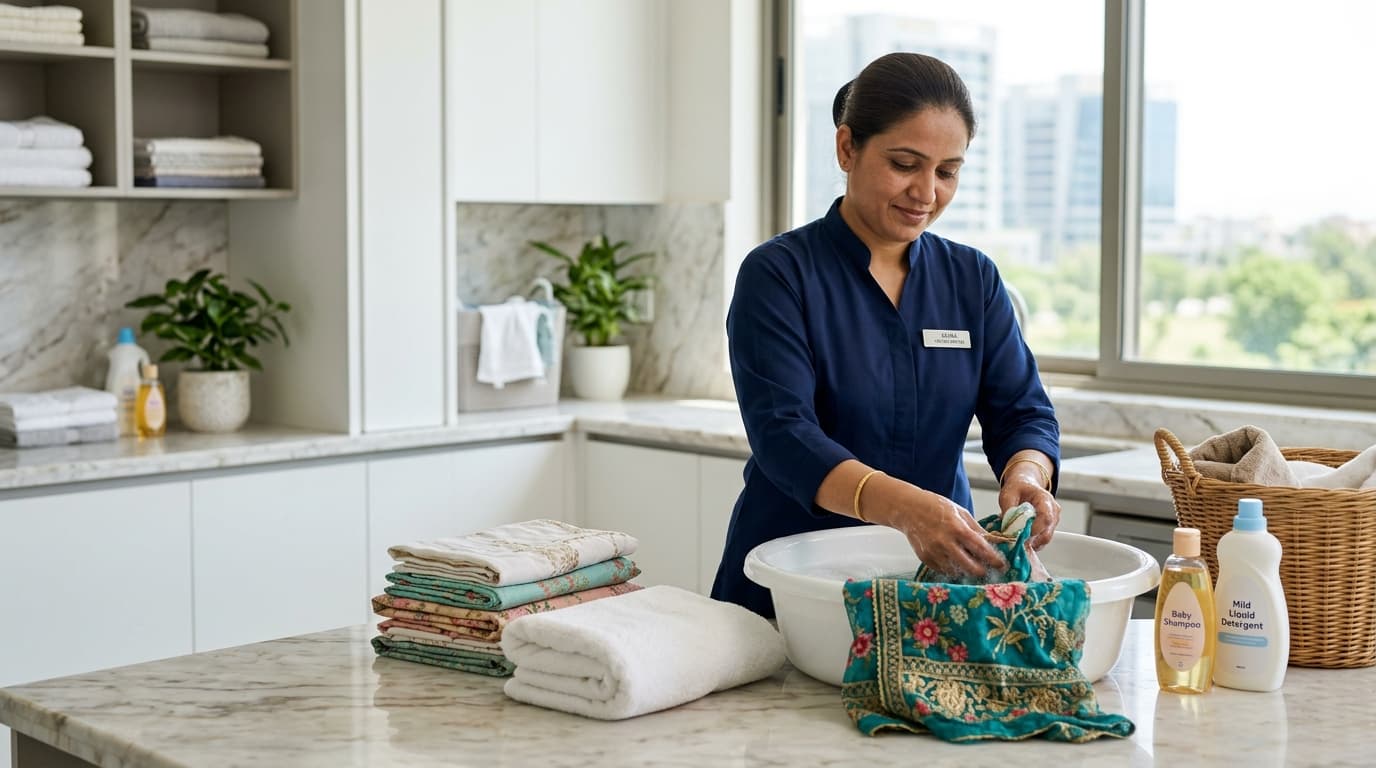
- The Right Detergent: Never use harsh, powdered washing machine detergents for handwashing. The strong enzymes and bleach alternatives in powders are too aggressive. Use a mild, pH neutral liquid detergent specifically designed for delicates, or simply use a few squirts of gentle baby shampoo.
Step 2 The Gentle Soak
The secret to professional handwashing is letting the water do the work, not your hands. You should never scrub or aggressively wring delicate fabrics.
- Fill the Basin: Ensure your sink or bucket is completely clean. Fill it with cool or lukewarm water. Never use hot water. Hot water shrinks natural fibers like wool and silk and causes bright colors to fade.
- Mix the Soap: Add a small amount of your gentle liquid detergent to the water and swirl it around with your hand until it is completely dissolved and slightly bubbly. Do not apply detergent directly onto the dry fabric, as this can cause concentrated chemical stains.
- Submerge and Swirl: Gently place your delicate garment into the soapy water. Press it down slowly until it is fully submerged. Gently swirl the water around the garment with your hands to ensure the soap penetrates the fibers.
- The Dwell Time: This is the most important step. Walk away. Leave the garment to soak completely undisturbed for fifteen to thirty minutes. The mild detergent needs time to chemically break down the body oils and sweat without any physical scrubbing.
Step 3 Targeted Stain Treatment (If Necessary)
If there is a specific stain, such as a makeup smudge on the collar or deodorant buildup under the arms, do not scrub the fabric against itself. The friction will cause "pilling" (those tiny annoying balls of thread) and damage the weave.
Instead, after the initial soak, lift the stained area out of the water. Apply a single drop of liquid detergent directly to the stain. Using your fingertips, gently massage the soap into the stain in soft, circular motions. For very delicate silks, use an extremely soft bristled baby toothbrush and tap the stain gently rather than brushing it.
Step 4 The Crucial Rinsing Process
Once the soak is complete, you must remove all the soap. Leaving soap residue in the fabric will make it feel stiff, attract dirt faster, and cause white fabrics to turn yellow over time.
- Drain the Dirty Water: Lift the garment out of the soapy water. Do not twist it. Simply hold it above the sink and gently squeeze the fabric together to push the dirty water out.
- Refill with Clean Water: Empty the sink and fill it again with fresh, cool water.
- The Plunge Rinse: Submerge the garment in the clean water. Plunge it up and down gently. You will see soap bubbles coming out of the fabric into the water.
- Repeat: Drain the water and repeat the plunge rinse two or three times until the water remains completely clear and bubble free.
Step 5 The Towel Roll Drying Technique
This is where most people destroy their clothes. The absolute golden rule of delicate handwashing is: Never twist or wring the fabric. Wringing breaks the delicate fibers and permanently ruins the shape of the garment.
To dry a delicate item safely:
- The Gentle Squeeze: Lift the wet garment out of the final rinse water and gently press it against the side of the sink to extract the heavy, dripping water.
- The Towel Roll: Lay a clean, dry, highly absorbent white bath towel flat on a table or the floor. Place your wet, delicate garment completely flat on top of the towel.
- Roll and Press: Starting from one end, roll the towel up tightly with the garment inside it, like a Swiss roll cake. Once it is completely rolled up, press down firmly on the towel roll with your hands (or even step on it gently). The dry towel will instantly absorb the vast majority of the water from the delicate fabric.
- Air Dry: Unroll the towel. The garment will now be just slightly damp, not dripping wet. Lay the garment flat on a fresh, dry towel or a mesh drying rack in a shaded, well ventilated area. Never hang heavy, wet knitwear or silk on a hanger, as the weight of the remaining water will stretch the shoulders permanently. Always dry delicates flat.
Managing Domestic Staff and Delicates
If you rely on a daily housemaid for your laundry, you must explicitly train them on this towel roll technique.
Many domestic workers are used to washing heavy cottons and linens, which require aggressive scrubbing and tight twisting to dry quickly on a washing line. If you give them a five thousand rupee silk scarf without instructions, they will instinctively twist it to dry it, permanently damaging it. Separate your delicates into a specific basket and demonstrate this soak and towel roll method to them personally to protect your expensive wardrobe.
Conclusion
Load shedding is an inconvenience, but it should never mean ruining your best clothes. Handwashing is a delicate art that relies on patience, cool water, and gentle chemical soaking rather than aggressive physical force.
By adopting the professional towel roll drying method and abandoning the habit of wringing out wet clothes, you can significantly extend the lifespan of your expensive embroidered lawns, pure silks, and winter cashmeres, ensuring they remain flawless and beautiful for years to come.
Frequently Asked Questions
Question Can I use hair shampoo to hand wash clothes if I run out of detergent? Answer Yes, a gentle, clear baby shampoo is actually an excellent, pH balanced alternative for washing pure silk or wool, as those fabrics are natural protein fibers, very similar to human hair. Avoid shampoos with heavy conditioners or artificial colors.
Question How do I prevent bright colors from bleeding during handwashing? Answer Cold water is essential for preventing color bleed. If you are washing a heavily dyed fabric for the first time, you can add a half cup of plain white vinegar to the initial soak water; the acid helps "set" the dye into the fabric.
Question Is it safe to put hand washed delicate clothes in the sun to dry faster? Answer No. Direct, harsh Pakistani sunlight acts as a powerful natural bleach. While great for white cottons, it will rapidly fade the beautiful bright colors of your expensive printed lawns and silks. Always dry dark and delicate colors in the shade.
Question Can Local Got Talent provide a maid who specializes in laundry? Answer Yes. When you book domestic help through our platform, you can specify your requirements. We can match you with housekeeping professionals who have verified experience in handling delicate fabrics, proper ironing techniques, and high end wardrobe management.
Local Got Talent Editorial
Home Management & Care Specialists providing elite standard insights for Islamabad & Rawalpindi residents.