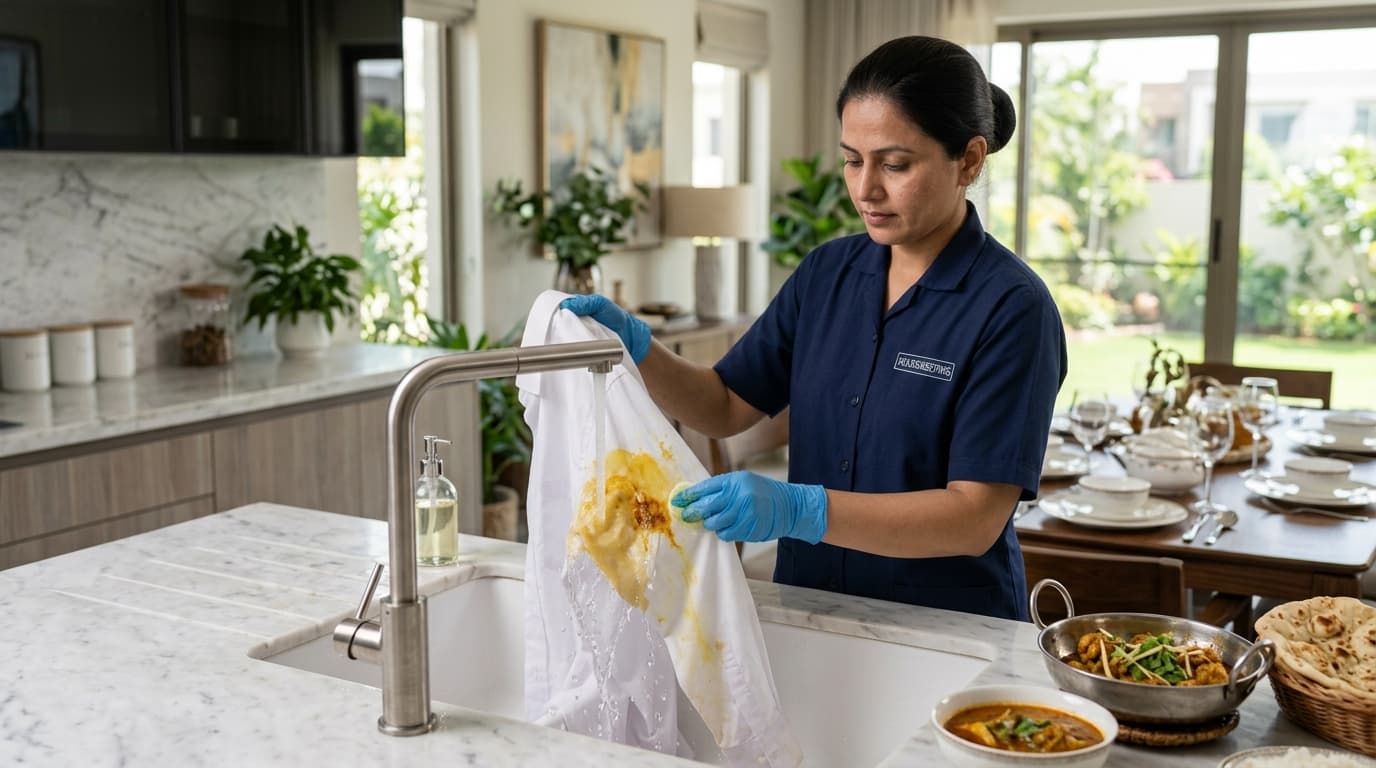
It is a tragedy that happens in almost every Pakistani home at least once a week. You are enjoying a fantastic, rich plate of chicken karahi or daal, and a single drop of yellow salan falls perfectly onto your crisp white cotton shirt.
Panic sets in. Your immediate instinct is to run to the nearest bathroom, turn on the hot water tap, and scrub the stain frantically with a bar of soap.
If you do this, you are making a fatal mistake. You are not removing the stain; you are permanently cooking it into the fabric. Turmeric (haldi) and cooking oils are complex chemical compounds. Removing them requires a specific scientific approach, not brute force.
In this educational guide, specifically tailored for busy residents of Zaraj Housing and the wider twin cities, we will break down the exact science of stain removal. We will settle the ultimate debate: hot water versus cold water.
The Anatomy of a Salan Stain
To remove a stain, you must first understand what you are fighting. A typical Pakistani salan stain is actually a dual threat. It is a combination of two entirely different components:
- The Oil/Grease: The cooking oil, ghee, or butter used as the base of the curry.
- The Pigment: The intense, bright yellow dye from the turmeric (haldi) and red chili powder.
These two components react completely differently to temperature and water. This is why a "one size fits all" scrubbing method always fails.
The Hot vs. Cold Water Debate
This is the most critical decision in stain removal. If you choose the wrong temperature, you will permanently set the stain into the microscopic fibers of the cloth.
When to Use COLD Water Cold water is your absolute first line of defense for almost all fresh stains, especially anything protein based (like milk, blood, or egg) or anything containing intense natural dyes (like haldi, tea, or beetroot). Why? Because heat acts as a catalyst. If you apply hot water to a fresh turmeric stain, the heat expands the fibers of your shirt and literally cooks the yellow pigment into the core of the thread. Once that happens, the stain is practically permanent.
When to Use HOT Water Hot water is exclusively for dissolving pure grease and heavy oils. Think about washing greasy pots in your kitchen sink; cold water just moves the grease around, but hot water melts it. However, you must never use hot water on a fresh salan stain because the hot water will set the turmeric pigment before it melts the oil. Hot water is only used in the final stages of the washing machine cycle, long after the initial yellow pigment has been treated.
The 4-Step Professional Salan Removal Method
If you drop salan on your clothes, stop panicking and follow this strict, four step professional sequence.
Step 1 The Immediate Lift (Do Not Rub) The absolute worst thing you can do is rub the stain with a napkin. Rubbing pushes the oil and the haldi deeper into the fabric fibers. Instead, take a blunt edge (like a spoon or a dull butter knife) and gently scrape away any solid pieces of food or thick oil sitting on top of the fabric. Then, take a clean, dry tissue and gently dab or blot the stain to absorb as much of the liquid oil as possible.
Step 2 The Cold Water Flush Run to the sink and turn on the cold water tap. Turn the shirt inside out. Hold the back of the stain directly under the running cold water. By flushing the stain from behind, you are pushing the yellow turmeric pigment back out of the fabric the exact way it came in. Flush it with cold water for a full minute.
Step 3 The Degreasing Attack Now you must attack the oil component of the salan. Do not use regular hand soap or standard laundry detergent yet. You need a targeted degreaser. The absolute best degreaser you have in your house is liquid dish soap (like Lemon Max liquid). Apply a few generous drops of dish soap directly onto the wet stain. Gently massage it into the fabric with your fingers (again, do not scrub aggressively). Leave the dish soap to sit on the fabric and break down the cooking oil for at least fifteen to twenty minutes.
Step 4 The Sun Bleach (The Secret Weapon for Haldi) After twenty minutes, rinse the dish soap out with cold water. You will likely notice that the oil is gone, but a faint, stubborn yellow turmeric shadow remains. This is where the magic happens. Do not put the shirt in the dryer. Wash it in your washing machine on a regular cycle, and then hang it outside in direct, bright sunlight. Turmeric is highly sensitive to ultraviolet (UV) light. Direct Pakistani summer sunlight will naturally bleach the remaining yellow pigment out of the fabric within a few hours. It is nature's most powerful stain remover.
What if the Stain is Old and Dried?
If you did not notice the stain until three days later, the cold water flush will not work. The pigment is already set.
For old salan stains, you need chemical intervention. Mix a paste of white vinegar and baking soda. Apply the bubbling paste directly to the old stain and let it sit for thirty minutes. The mild acid in the vinegar helps break the bond between the turmeric and the fabric. Rinse it with cold water, apply liquid dish soap to lift the loosened grease, and wash as normal.
Always remember to test this vinegar paste on a small, hidden corner of the garment first, especially if it is a dark colored silk or a delicate fabric, to ensure it does not bleach the actual dye of the shirt.
When to Call a Professional
While the four step method works brilliantly for cotton, polyester, and standard daily wear, you should never attempt to treat heavy stains on premium fabrics at home.
If you drop chicken karahi on a heavily embroidered chiffon wedding dress, a pure silk scarf, or a tailored wool suit, do not apply dish soap and do not put it under the tap. Water will leave a permanent ring on silk, and rubbing will destroy delicate embroidery threads.
In these critical situations, gently blot the excess oil with a dry tissue and immediately call a professional laundry and dry cleaning service. Professional dry cleaners use specialized chemical solvents that dissolve oil and turmeric instantly without the use of water, ensuring your expensive garments are perfectly restored without any risk of shrinkage or color bleeding.
Conclusion
Stain removal is an exact science, not a guessing game. The next time you face a terrifying yellow salan stain, resist the urge to scrub it with hot water.
Remember the golden rules: scrape gently, flush from behind with cold water to push the pigment out, attack the grease with dish soap, and use the power of the sun to bleach the remaining turmeric shadow. By understanding the chemistry of the stain, you can save your favorite clothes from the trash bin and keep your wardrobe looking pristine.
Frequently Asked Questions
Question Will bleach remove a turmeric stain from a white shirt? Answer Interestingly, chlorine bleach can sometimes react with turmeric and turn the yellow stain a bright, permanent reddish pink. It is highly risky. Sun bleaching is a much safer and far more effective method for haldi stains.
Question I dropped tea (chai) on my shirt. Do I use the same method? Answer Yes, tea is also a tannin/dye stain like turmeric. Flush a fresh chai stain immediately with cold water. However, you do not need the heavy dish soap degreaser because chai does not contain cooking oil. Just cold water and standard laundry detergent will work.
Question How do I remove an old oil stain that has already been through the dryer? Answer Once a grease stain has been baked in a hot dryer, it is extremely difficult to remove. Try covering the old stain with a heavy layer of baby powder or cornstarch and leaving it overnight to draw out the set oil. Brush it off the next morning, apply heavy liquid dish soap, and wash it in the hottest water the fabric can handle.
Question Can Local Got Talent provide regular ironing and laundry services? Answer Yes! Many of our verified, professional housemaids are specifically trained in fabric care, proper washing techniques, and high quality ironing to ensure your family's wardrobe is perfectly managed on a daily basis.
Local Got Talent Editorial
Home Management & Care Specialists providing elite standard insights for Islamabad & Rawalpindi residents.