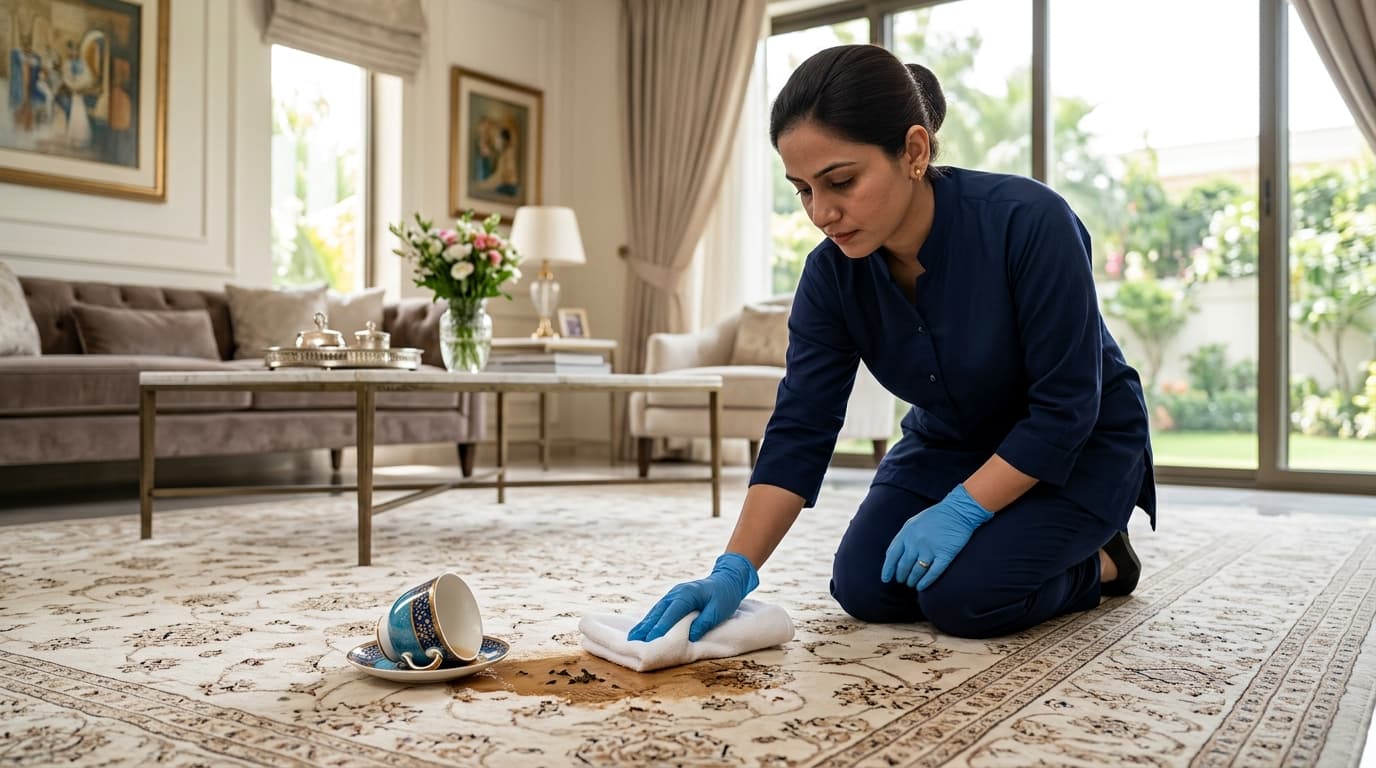
The Pakistani drawing room is a place of pride, meticulously decorated with expensive furniture and often anchored by a beautiful, high quality carpet or a traditional Persian rug. It is also the exact location where we serve hundreds of cups of hot, strong chai to our guests every month.
Statistically, a spill is inevitable. A guest bumps a table, a child runs past, and a full cup of hot chai spills directly onto the center of your expensive, light colored carpet.
The immediate reaction in most households is absolute panic. Someone grabs a wet cloth, drops to their knees, and starts scrubbing the carpet aggressively with soap.
This is the worst possible reaction. Scrubbing a wet carpet destroys the twisted fibers, causing them to fray and look permanently worn out. Furthermore, tea is a tannin based stain; if you clean it incorrectly, it will dry into a massive, permanent brown ring.
In this guide, tailored for homeowners in DHA, Bahria Town, and across the twin cities, we will outline the exact emergency protocol professional deep cleaning teams use to extract tea stains from carpets safely and completely.
The Science of a Chai Stain
To defeat the stain, you must understand what is in the spilled cup:
- Tannins: The natural brown plant dye from the tea leaves. Tannins are highly aggressive dyes (they are the same compounds used to tan leather).
- Heat: The tea is hot. Heat opens up the pores of the carpet fibers, allowing the tannin dye to penetrate instantly and deeply.
- Milk and Sugar: If the tea has milk (protein) and sugar (sticky carbohydrate), it becomes a complex stain. If you do not remove the milk completely, it will rot inside the carpet pad and smell like sour milk for months.
Because of this complex chemistry, you cannot use hot water to clean it, and you cannot use regular alkaline soap, which can actually set tannin stains permanently.
The 4-Step Emergency Extraction Protocol
When the spill happens, you have a critical ten minute window before the hot liquid soaks through the carpet backing and into the floor pad below. Move fast, but move systematically.
Step 1 The Massive Blot (Never Scrub) Your first goal is extraction, not cleaning. You must pull as much liquid out of the carpet as possible before it spreads. Take a massive stack of dry, clean white paper towels or a thick, dry white cotton towel. (Do not use a colored towel; the wet carpet can pull the dye out of a cheap towel and create a secondary stain). Place the thick dry towel directly over the spill. Step on the towel with your bare feet or press down with all your weight using your hands. The intense pressure will force the liquid chai up into the dry towel. Lift the towel, fold it to a dry section, and press down again. Repeat this blotting process rapidly until the towel comes away completely dry and no more liquid is transferring.
Step 2 The Cold Water Dilution Once you have extracted the bulk of the spill, a concentrated brown stain will remain on the surface fibers. You must dilute this concentration. Pour a small amount of ice cold water directly onto the stain. (Cold water prevents the milk protein from cooking into the fibers). Do not flood the carpet; just pour enough to saturate the stained fibers. Immediately take a fresh, dry white towel and press down with all your weight to extract the cold water. You will see the water pulling the diluted brown tea dye up into the towel. Repeat this cold water flush and extraction process two or three times until the stain becomes very faint.
Step 3 The Vinegar Neutralizer (The Tannin Killer) To defeat the remaining brown tannin dye, you need mild acidity. Regular alkaline soap will not work. Mix a solution of one cup of cold water and one cup of plain white vinegar. (Do not use brown synthetic vinegar). Using a spray bottle or a sponge, apply this vinegar solution generously to the remaining stain. Let it dwell for five minutes. The acid in the vinegar chemically breaks the bond between the tea tannin and the carpet fibers. After five minutes, use a clean, dry towel to blot and extract the vinegar solution with heavy pressure. The stain should now be completely gone.
Step 4 The Drying Tower Even though the surface looks clean, the base of the carpet is still damp. If a carpet stays damp for more than 24 hours, it will develop a terrible, musty mildew smell. To dry it rapidly, place a thick stack of dry paper towels over the damp spot. Place a heavy object (like a stack of heavy books wrapped in plastic, or a heavy pot) on top of the paper towels. Leave it overnight. The heavy weight will continuously wick the remaining moisture out of the deep carpet pad and up into the paper towels. The next morning, remove the weights, fluff the carpet fibers with your fingers, and aim a pedestal fan directly at the spot to dry it completely.
The "Browning" Phenomenon
Sometimes, you clean a tea stain perfectly. The carpet looks completely clean. But the next morning, when the carpet is fully dry, a faint brown ring has magically reappeared around the edges of the spill.
This is a chemical reaction called "cellulosic browning." It happens when the base of the carpet (often made of jute or cotton) gets too wet and dries too slowly. The natural brown tannins in the jute backing wick up to the surface as the water evaporates.
If this happens, do not panic. Do not scrub it with soap; soap makes browning worse. Simply spray the brown ring lightly with the 50/50 white vinegar and water solution, blot it gently, and dry it as fast as possible using a high speed fan. The acidity of the vinegar reverses the browning reaction instantly.
When to Call the Professionals
The manual extraction method works flawlessly for fresh spills. However, if the tea stain happened a week ago, dried completely, and was ignored, or if someone already ruined the spot by scrubbing it aggressively with laundry detergent, home remedies will likely fail.
This is when you must call a professional deep cleaning agency.
Professionals use highly specialized, expensive equipment called Hot Water Extraction (HWE) machines. These industrial machines inject specific, heated tannin removing chemicals deep into the base of the carpet at high pressure, and simultaneously vacuum the liquid back out with massive suction power. They do not just clean the surface fibers; they extract the rotting milk and set dyes from the very bottom pad of the carpet, leaving it perfectly clean and practically dry within a few hours.
Conclusion
A spilled cup of chai is a temporary crisis, not a permanent disaster. The key to saving your expensive carpets is immediate, aggressive extraction and understanding the power of cold water and white vinegar.
Train your housemaid and your family members on the "Blot, Never Scrub" rule. By extracting the liquid immediately rather than rubbing it deeper into the fibers, you can handle almost any household spill like a true professional.
Frequently Asked Questions
Question Can I use baking soda to absorb a wet tea spill? Answer Yes, baking soda is highly absorbent. After your initial heavy blotting with a towel, you can pour a thick layer of dry baking soda over the damp spot. It will absorb the remaining liquid and odors. Once it is completely dry the next day, simply vacuum up the solid powder.
Question Does this vinegar method work on coffee stains too? Answer Yes, perfectly. Coffee is also a tannin based stain, very similar to tea. The exact same cold water flush and white vinegar extraction protocol will remove black coffee and milky coffee spills.
Question Why did the carpet spot turn stiff and crunchy after I cleaned it? Answer It turned crunchy because you used too much soap or detergent and failed to rinse it out completely. The soap dried in the fibers. To fix it, spray the crunchy area with warm water and blot it heavily with a dry towel to extract the old, dried soap residue.
Question How often should I professionally clean my large drawing room carpet? Answer For a drawing room with moderate traffic, you should book a professional deep steam extraction once a year. This removes the deep set dust, dead skin cells, and microscopic allergens that a standard vacuum cleaner cannot reach, prolonging the life and vibrant color of the rug.
Local Got Talent Editorial
Home Management & Care Specialists providing elite standard insights for Islamabad & Rawalpindi residents.